
Saturday, July 08, 2006

go ahead, be happy!

the keys to happiness are available to anyone, says this article in lifescience.com today:

Money that lifts people out of poverty increases happiness, but after that, the better paychecks stop paying off sense-of-well-being dividends, research shows.

One route to more happiness is called "flow," an engrossing state that comes during creative or playful activity, psychologist Mihaly Csikszentmihalyi has found. Athletes, musicians, writers, gamers, and religious adherents know the feeling. It comes less from what you're doing than from how you do it.

Sonja Lyubomirsky of the University of California at Riverside has discovered that the road toward a more satisfying and meaningful life involves a recipe repeated in schools, churches and synagogues. Make lists of things for which you're grateful in your life, practice random acts of kindness, forgive your enemies, notice life's small pleasures, take care of your health, practice positive thinking, and invest time and energy into friendships and family.

The happiest people have strong friendships, says Ed Diener, a psychologist at the University of Illinois
okay, now we know it. not that we didn't know it before. so what's up? how come that, armed with this knowledge, we don't all go ahead and be happy?

there's probably many reasons. one of them has fascinated me quite a bit lately. many of us have this great reluctance to do take seriously really ordinary, run-of-the-mill recipes. let's take the one about gratefulness, something i've discussed in other blog entries before.

here's a scenario:

mick: "i'm so unhappy! what should i do?"
terry: "i write a gratitude list every day - 10 things i'm grateful for every day. wanna try that, too?"
mick: "geez, i've heard that one before. if it was so easy, everybody would be happy!"
terry: "exactly, it's easy, and if everybody did it, they'd be a lot happier!"
mick: "oh, leave me alone with these mom-and-pop ideas. you have no idea how complicated my life is!"
terry: "ok, before i leave you alone with this, can i ask you just one question. have you tried gratitude lists before?"
mick: "yes! i did one once, and it didn't work! it didn't make me happy!"
terry: "oh. well, i guess for me it works because i do it every day."
mick: "it's easy for you. you are already happy!"

so mick is unhappy. he uses words that sound like he's looking for advice. then terry comes along with an idea and mick turns it down. it's because a) maybe he wasn't even looking for advice; b) the advice is too "easy", which c) devaluates the depth of his unhappiness.

mick has been unhappy for so long that his unhappiness has become quite important. he does not wish for his unhappiness to be devalued.

he expresses the depth of his unhappiness by saying that his life is "complicated". because he feels unheard (and because he probably has been unheard for many years), he is not interested in what terry has to say/offer. also, mick thinks that because the simplicity of the remedy does not match the depth of his unhappiness, it cannot work.

also, because he has used this remedy once and it did not work right away, he feels justified in not trying it again. it didn't work, and it does not match the depth of his depression - so why try it again?

unfortunately, mick does not know that this remedy does indeed work in most situations if applied on a consistent basis. he doesn't know it because it's an experiential thing.

remember when you were 8 years old and you saw people kissing and you thought, "eeeeek, what a gross thing to do!" and then when you were 17, you couldn't get enough of it?

experiencing the cumulative effect of gratitude lists (and other ordinary remedies) is a bit like that. it's as simple as a kiss. and can be as life changing.

isabella mori
counselling in vancouver

Friday, July 07, 2006

gender identity: shapeshifting

a few weeks ago, i spoke of the book self organizing men, a collection of literary works promoted in jay sennet’s blog, around the theme of FtM’s – people who were born biologically female and transition towards male.

here is another work of art in it, a jewel of a poem. it weaves in and out and around the many levels of experience of its author, female-to-male queer activist eli clare who starts off the poem by noting the similarity between two different kinds of drug use:

I lay out syringe, alcohol pad, vial: a ritual
connecting me to junkies. Draw the
testosterone,
and push needle deep through skin into
muscle.

all of this happens in (inside the temporal space of) spring, another moment of transition:

Open the windows, forsythia spilling its dense yellow.

but not much of this poem happens directly “inside”; much of it is in-between. eli is “a shapeshifter” – as a transgendered (transgendering?) person, as a person with cerebral palsy, as an activist, an anti-hierarchist. shapeshifters, it occurs to me, are, or at least can be, magicians: wise people, shamans, those who dare to travel across dangerous and forbidden boundaries, back and forth and back and forth, cross-pollinating worlds.

shapeshifting as a magician but also very concretely, very physically:

Voice cracks.
Stubble glints.

Body begins

and if there’s a lot of flying back and forth between worlds, it gets confusing, even for the magician:

Crip skin,
white skin:
which stories
do I tell
the best?

… and tiring:
... here at the confluence river and ocean collide—current rushing head long, waves pushing back—stones tumble one against another; logs drift and roll. Tell me: where in this hiss and froth might I lay myself down?
where? where could eli lay himself down? can he lay himself down before he lays his female identity down (to sleep? to rest?) can any magician ever lay himself down for long?

and while i understand that there needs to be rest for this body and mind, i am touched, tickled, by the poem's freshness: all the almost haiku-like references to spring, the walking down the street with kids greeting him, rushing rivers, tumbling logs – there is so much fresh, breezy movement; while this need for rest is understandable – is rest really interesting to eli, or will he, after a short moment of catching his breath, spring up again to see what’s around yet another corner?


isabella mori
counselling in vancouver

Thursday, July 06, 2006

psychopaths

a few weeks ago i had a conversation with someone about psychopaths. since i can't remember for the life of me who i had this conversation with (hmmmm ... should i make my next post about memory?), i thought i'd post here a link to a very interesting article about this topic, and hopefully that person is among my readers.

the article is about joseph newman, a psychologist at the university of wisconsin. here is an excerpt:

[Newman] believes that psychopathy is essentially a type of learning disability or "informational processing deficit" that makes individuals oblivious to the implications of their actions when focused on tasks that promise instant reward. Being focused on a short-term goal, Newman suggests, makes psychopathic individuals incapable of detecting surrounding cues such as another person's discomfort or fear.

In a study he repeated in different prison populations, for instance, Newman examined how quickly psychopathic and non-psychopathic individuals respond to a series of mislabeled images, such as a drawing of a pig with the word "dog" superimposed on it. Researchers flashed each image and then timed how long it took for subjects to name what they saw.

Over and over again, Newman found that non-psychopathic subjects subconsciously stumbled on the misleading labels and took longer to name the images. But psychopathic subjects barely noticed the discrepancy and consistently answered more quickly.

Newman says the result is one instance of how psychopathic individuals have difficulty processing peripheral cues, even when those cues are entirely obvious to everyone else. Furthermore, the study task didn't involve any of the emotions that people commonly associate with psychopathy, such as anger or a lack of fear. So the fact that psychopathic subjects barely noticed the wrongful labels - even in the absence of emotional cues - supports the idea that a psychological deficit might be at play.

read more here ...

i had often thought that at least in some instances, psychopathy might involve something like what newman proposes.

i have worked in prison environments, and would not say i have met many psychopaths there - and the ones that i did meet were actually not the ones with the most serious crimes.

particularly, i remember one person who had shot someone (yup, compared to some of the other offenders, that wasn't very serious), who then ended up in a wheelchair.

the offender had a complete and quite baffling lack of interest (never mind concern or even compassion) for the victim. it was as if there was a hole where that concern would normally be found in other people.

i had noticed that before in other people who i wouldn't necessarily call sociopaths or psychopaths, but who still would show a strange lack of connection in certain situations.

the first time i noticed that was with someone who nowadays might be classified as a sex addict. he was very charming, very intelligent - but completely nonchalant about the far-reaching effects his addiction had on the people around him. having worked with people battling with addiction, i find that unusual; often people with addictions are quite uncomfortable about the fallouts from their behaviour. but not so with that person. i remember thinking that it seemed like a part of his psyche had been amputated.

if you're interested in a more academic treatment on the topic of psychopathy, you might want to read this article by linda mealey. it's a little old but still quite interesting.

isabella mori
counselling in vancouver
Wednesday, July 05, 2006

understanding spammers

okay, here is something that i absolutely have to get off my chest:

what goes on in the head of spammers?

and what, specifically, is the process of coming up with these amazing names, like

abhorrence p. versifying
amateurism g. causal
ambiguities u. magnetos
annihilation j. silliness
arnulfo mcleod

(more at the end of this entry – i don’t want to spam your reading time with the remaining 41 names, from demetrius column to zelma mooney)

so, someone tell me how this works.

is there are spammers’ name factory? if so, how does it work? is it automated, or is it a dingy old industrial complex in manila, where 13-year-olds write their fingers bloody with name after name for a starvation wage?

are spammers so bored with what they do that they entertain themselves with coming up with these names?

is there perhaps a secret spammers’ naming olympics, or some kind of grammy award for the most inventive spammer’s name?

or is it something you learn in spammers school?

or are they perhaps all high on VI*a*GRA or h OO dia?

one last thing: do these people know the words they’re using – i mean, are they even aware of the hilarity of these names? think about the irony of “annihilation j. silliness” sending you a completely inane message.

on the other hand, “experiencing a. pit” probably knows what she/he/it is doing.

i tried to find some material on the psychology of spammers and haven’t come up with anything at all. maybe i need to dig deeper. considering how big (and irritating) spamming is in our internet lives, it’s suprising that i didn’t find anything yet.

anyways, here’s the rest of the names.

demetrius column
democritus mateo
disbarring f. lunatic
emulsified u. carrier
eridanus h. sweatier
exorcized h. scuttle
experiencing a. pit
fry dempster
genaro lovett,
godiva stanley
guadalupe harper;
harebrained l. ramrodded
heidi champagne;
highchairs p. polyphemus
hohenstaufen v. sicking
inflorescence b. afghan.
jernigan fletcher,
jocundity h. sulkiness
joris dng
kermit clinton
leaching k. criming
lofting c. amendable
maillol l. shrews
microwaving c. grammes
monomania i. buxom
morocco s. yanking
morse k. commencement
pacifically t. gloss
pauperism p. perimeter
pocahontas e. maharajas
propitiate f. mockingly
schlessman lankford
shrub b. nipples
steers q. bloodhound
stress f. obelisks
trammelled s. intercessions
vercingetorix brick
yesenia hopkins,
young alford,
zaida coxum,
zelma mooney


isabella mori
counselling in vancouver

Tuesday, July 04, 2006

nonviolent communication

a challenge issued by the nonviolent communication site:
The Center for Nonviolent Communication (CNVC) would like there to be a critical mass of people using Nonviolent Communication language so all people will get their needs met and resolve their conflicts peacefully.

10 things we can do to contribute to internal, interpersonal, and organizational peace:

(1) Spend some time each day quietly reflecting on how we would like to relate to ourselves and others.

(2) Remember that all human beings have the same needs.

(3) Check our intention to see if we are as interested in others getting their needs met as our own.

(4) When asking someone to do something, check first to see if we are making a request or a demand.

(5) Instead of saying what we DON'T want someone to do, say what we DO want the person to do.

(6) Instead of saying what we want someone to BE, say what action we'd like the person to take that we hope will help the person be that way.

(7) Before agreeing or disagreeing with anyone's opinions, try to tune in to what the person is feeling and needing.

(8) Instead of saying “No,” say what need of ours prevents us from saying “Yes.”

(9) If we are feeling upset, think about what need of ours is not being met, and what we could do to meet it, instead of thinking about what's wrong with others or ourselves.

(10) Instead of praising someone who did something we like, express our gratitude by telling the person what need of ours that action met.
which one do you find easy? which one seems hard?

i find this one a bit challenging: "if we are feeling upset, think about what need of ours is not being met, and what we could do to meet it, instead of thinking about what's wrong with others or ourselves." when i'm really upset and a solution does not easily present itself, i do end up thinking about my unmet needs - but really only once i'm feeling backed into a corner.

remembering that all humans have the same needs - well, that's always been pretty obvious to me. i think in many ways it goes even further: plants, animals, to a degree even things have needs, too: to be cared for, to be treated with respect.

isabella mori
counselling in vancouver

Monday, July 03, 2006

homilies i like

never pass up a good opportunity to shut up.

it takes courage to grow up and turn out to be who you really are.

the best way to stop feeling like a liar is to stop lying.

"the bad thing about self-pity is that it gives me permission to do absolutely nothing."

"don't believe everything you think."

right actions for the future are the best apologies for wrong ones in the past.

it is not good to pray unless we are willing to accept god's answers.

isolation is a darkroom for developing negatives.

"thank you, god, for the beautiful day i'm going to have if i can just get rid of my fucking attitude."

"i had a very long childhood"

peace is not something you wish for, it is something you make, something you do, something you are and it is something you give away


isabella mori
counselling in vancouver

Friday, June 30, 2006

a video!

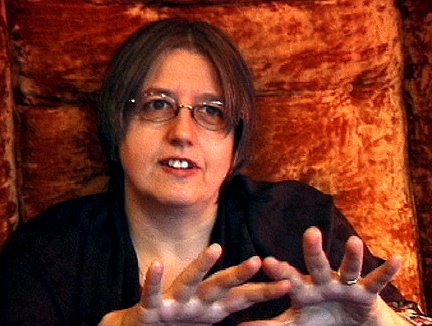
a few weeks ago, my friend carol from alphaglyph productions did an interview with me. here is a picture from it:


and you can see the video on the alphaglyph podcast site. you can try either the "download" or the "play" button. you might need the quick time with itunes plugin for it (for some systems, quick time alone doesn't seem to do the trick).

this video is on the intimacy of the therapeutic relationship.

isabella mori
counselling in vancouver

Thursday, June 29, 2006

overcoming codependency

once in a while i post poetry here. it helps process our thoughts and feelings.

but there's no limit to the art forms we can use to express ourselves. here is the drawing of a friend of mine, literally depicting what's going on inside his head, inspired by a list of codependent behaviours he found on the web:


dealing with the challenges life throws at us by trying to control (manipulate?) others is an understandable and very common coping mechanism. fortunately, my friend is someone who does not want to just cope anymore; he wants to live.

this very insightful drawing is part of his journey towards living a more conscious life where he deals lovingly with himself and those around him. the illusion that we can make others think, feel or act in a certain way is very seductive and can be so subtle. often we don't even know we labour under this illusion. breaking free from it feels risky and scary - but it does lead to freedom, freedom for everyone concerned.

isabella mori
counselling in vancouver

Wednesday, June 28, 2006

alternative thought records, pt II

a continuation from yesterday's blog regarding alternative thought records:

this is an example of using alternative thought records. in the beginning, it can usually only be done afterwards. with time, one can get practiced enough to try and do it right in the moment.

this is an example of debriefing the next day:


situation:
harry received an email from his stepmother, where she hints that harry isn’t spending enough time with her. after all she’s done for him, stopping by her place a few times a week after work is the least thing he can do, she claims.

when did it happen?
last night.

who was involved?
harry, his stepmother, and his partner

where did it happen?
at home

what happened?
having just come home from another exhausting day at work, harry read this email, and what little energy he had left totally went out of him. instead of making dinner as he had promised, he just lay down on the couch for an hour, staring at the wall. trying to be understanding, his partner went ahead and made dinner but it was obvious that he was not pleased, especially since harry didn’t explain what had happened.

feelings:

at first, in rapid succession: angry, frustrated, guilty and ashamed. then, nothing. numbness.

intensity of feelings: anger: 80%, frustration 50%, guilt and shame: 80%. numbness: felt like 100%.

automatic thoughts:
  • what the %#$& ???
  • can i ever do right by her?
  • she’s right, she has done so much for me
  • i’m such a rotten son. and she hardly ever says anything anymore about me being gay. i should be grateful. i’m such a stinker for getting mad when she sends me these emails.
  • i’m such a loser. i promised harry i’d make dinner and what am i doing? nothing!
  • the numbness has no words, really, it’s just this freaky dull roar, like being caught all alone in a huge grey machine.

cognitive traps or distortions:
some cognitive distortions in these thoughts:
  • overgeneralization: can i ever do right by her?
  • shoulds: i should be grateful
  • labeling: i’m such a stinker

alternative thought:

  • i’m angry at mom right now. that’s the way i feel right now. i can live with that.
  • i feel exhausted right now. and i want to make dinner. i don’t need to feel overwhelmed by this. i’ll just put one foot in front of the other.
  • i notice this feeling of numbness coming on. being numb has never done anything for me. i’ll remember to focus on the feeling in my hands while i make dinner – that usually keeps me from falling into numbness.

feelings now: accepting (80%), clarity (70%)

(if these alternative thoughts would have been applied right at the moment of the situation happening, this is what the feelings might have been:

angry: 40%, exhausted 50%, accepting 90%, hopeful 55%, present 60%, alert 70%

compare this to the previous list: intensity of feelings: anger: 80%, frustration 50%, guilt and shame: 80%. numbness: felt like 100%)


this is an example for someone who is dealing with depression. however, an alternative thought exercise can be helpful in many different situations. as we can see, most moods (such as depression here) are a complex interplay between many different, and sometimes opposite, thoughts, feelings and actions.

this exercise is in some ways similar to the what i discussed in a previous blog entry, anger transformed.

why don't you try one of them next time you're facing a difficult situation and let me know how it goes?

isabella mori
counselling in vancouver

Tuesday, June 27, 2006

a tool: alternative thought record

cognitive therapies, which focus on examining and “repairing” one’s thoughts, are often seen as the best way to deal with depression. while i believe that the tools that cognitive therapies provides are just one among many ways to help with depression, they can nevertheless be quite useful. so here is a tool from this tool box – enjoy it!

i’ll post it in two postings – the first is the “recipe”, and the one i’ll post tomorrow is an example of an application. (and thanks to depression forums for providing this tool).

alternative thought record

situation: describe an event or situation, that occurred within the last few
hours, or days at the most, in which you experienced emotional distress.

when did it happen?
who was involved?
where did it happen?
what happened?

feelings: describe the feelings that arose at that time. rate the intensity of your feelings from 0-100%.

automatic thoughts: list one or two of the most intense thoughts or images that you had at the time of the event.

cognitive traps or distortions: examine your thoughts and images
to see if there are cognitive distortions (cognitive traps are distorted thoughts such as all-or-nothing thinking, should statements and blaming)

alternative thought: describe an alternative, balanced way of thinking about this event. notice the cognitive distortions in your original thinking, and create a new statement that balances or eliminates those distortions.

rate the intensity of you feelings now, from 0-100%.

tomorrow: an application of this tool.

take care!

isabella mori
counselling in vancouver

Monday, June 26, 2006

addiction, shame and secrets

medicalnews reports this today:

An article published in the recent issue of Psychological Science ... demonstrates that individuals have a strong tendency to eat only a single unit of food, regardless of the unit's size or caloric value.

The authors conducted experiments with offering free food in public areas, varying the size of the product unit and the size of the serving utensil ...

The results demonstrate an identifiable unit bias, as passersby tended to take a single unit or spoonful of food without consideration for its size or quantity. As tests were conducted both within eyesight of others and in a more discreet location, the bias in favor of consuming a single unit cannot be attributed solely to the avoidance of perceptible gluttony ...
well, that may be the case for some people. however, this last sentence reminds me how little people know about the inner workings of people struggling with addictions. a "discreet location" would still not be safe enough for many people with a food addiction.

the vast majority of people struggling with addictions function quite well in the "normal" world. part of this functioning involves an intimate relationship between addiction, shame, and intricate techniques designed to conceal the addiction.

for many overeaters, a "discreet location" in a public place will still bring forth the need to appear a normal eater. the deep shame over the addiction would be much stronger than the apparent safety of such a discreet location. many overeaters will only overeat in the privacy of their homes, often alone, maybe even with the curtains drawn.

i have met food addicts who had become experts at climbing out of bed, getting dressed and driving off in the middle of the night without barely making a sound, so as to not wake up anyone in the house and alert them to their excursion to a 24 hour convenience store.

of course, this often turns into a vicious cycle. the person wants to eat, eat, eat - but not be seen eating. so she creates a bubble of isolation around herself. this isolation is depressing, and the depression is then medicated with more food - and thus the cycle continues.

ironically, then, eating in public can be the first step towards recovery for some people. eating that second chocolate bar in public, or finishing off the big bag of chips for all to see, can be a healing experience. maybe the eating behaviour is still there, but at least the layers of shame and hiding are taken off.

isabella more
counselling in vancouver

Saturday, June 24, 2006

my birthday wish


today is my birthday.

i have a wish.

at this time, there are a few people in my life who are deep in the throes of suffering.

my wish is that whoever reads this, may send good thoughts to my friends, to any friend you know who is suffering.

in the words of the buddha

may you be free from danger and fear.
may you be peaceful, happy, and free from suffering.
may you live with ease

Friday, June 23, 2006

Thursday, June 22, 2006

gender freedom

as my dear readers know, one of the blogs i watch is daily dose of queer, where i found a link to jay sennett’s blog. he’s looking for bloggers to review a new anthology called “self organizing men” – women transitioning into malehood (or FtM, as it’s often called). good for him to use blogvertising to get this material on the market.

i agreed to be one of his guinea pigs, and am i ever glad i did.

first i have to confess that i was not sure what to expect, and was afraid i might stumble into the badly-mumbled outpourings of a confused twenty-year-old.

well, i was wrong. i can’t be male by nick kiddle is very well written. every sentence is clean and clear, so the reader can completely concentrate on the story. as a writer, i want what nick’s got!

the piece traces nick’s travels and travails as he (i’ll refer to nick as a male here, hope that’s okay with you, nick) winds his way through the landscape of gender identity.

unfortunately, not everyone sees it as a landscape.

i guess we should be grateful that we’ve moved out of gender identity being a wasteland of two camps – male or female. at least there is a recognition now that some of us have landed in the wrong camp and need to move, so now we have four camps – female to male, male to female, female, male.

but really, i want my world to consist of more than four camps. i want a landscape with flowers of different hues of colours, many paths to journey along, hidden nooks and crannies to explore.

nick, too, wants freedom around his gender identity. there are moments when he identifies as a man, and others when he finds it useful to be a woman. one of the things that are important to nick is to have children, and children of his own. this is why, for now at least, he decides to stay in a female body.

i can’t wait to hear how other people react when they read nick’s account of meeting a psychiatrist who, instead of assisting nick in building more supportive relationships, cannot tear himself away from a morbid fascination with nick’s diagnosis of gender dysphoria. my first reaction was anger – i just wanted to go and slap that ignorant jerk – and when i got to the point where mr. psychiatrist sits back, smug in his “knowledge” that nick is “really” a woman, i just started crying.

this is not just the story about one of those transgendered people, somewhere off in a far corner of our safely heterosexual world. it’s the story of all of us who need to be free to explore who we are, free to change, free to express ourselves.

thank you, jay, and thank you, nick.

isabella mori
counselling in vancouver

Wednesday, June 21, 2006

understanding "enough"

just as hope can be seen from opposing viewpoints, i think the term "enough" can be seen from different points of view as well.

let’s take these three examples:

“you don't need another blanket, joe. it’s not that cold – these two blankets are enough.”

“don’t worry about making every page perfect. remember, it’s a draft; what you have here is great, it’s definitely good enough.”

“no thanks, i don’t need another helping of pasta; i have enough.”

in the first scenario, joe feels he needs more but he is dismissed by someone who feels she is in a position to adequately assess joe's needs (and perhaps assess them better than joe himself).

in the second scenario, someone aspires to be perfect and she is reassured; the situation does not call for perfection, and what’s already there is more than adequate.

the person in the third scenario has a good sense for just exactly how much he needs; that need has been fulfilled, and he effortlessly states what his boundaries are: “i have enough.”

we could say that the first situation is about deprivation; the second one is about perfectionism and the third is about balance.

what do we want to have in our lives? deprivation, perfectionism or balance?

it is interesting to note that in the first two scenarios, both times, it is someone else who assesses what’s enough. only in the third, it’s the person himself who decides what’s enough.

we often have uneasy feelings about the word “enough”. often it’s around the phrase “good enough.” perhaps the next time this unease crops up, you can ask yourself, who is making the decision whether something or someone is good enough? and if it’s you who seems to be making that decision and you still feel uneasy, you can ask yourself, “is that really me talking, or is that someone else’s voice inside me? my mother? my teacher? is that voice still valid?”

let’s get to the point where you decide what’s good enough.

isabella mori
counseling in vancouver

Monday, June 19, 2006

understanding hope

hope is one of those things that can go both ways. let me first tell you about what i believe to be the negative aspects of hope, and then about the bright side of hope.

the carrot and the stick

hope can be the carrot of the famous "carrot and the stick". it can be that delicious something in the future that is always dangled in front of us but which can never (or rarely) be attained. "i love you but i'm not ready for commitment" - ever heard that? what that often means is "if you just stick around long enough - because YOU love ME, don't you? - then some time in the future i might just be ready to get married." but the person who dreams that their lover will eventually come around will often not have their hopes fulfilled. in the meantime, this person has spent a lot of energy wishing for something that might never happen - and when it finally becomes obvious that it won't happen, more energy will go down the drain of disappointment.

getting lost in the future

this is closely related to the fact that hope is about the future. planning and thinking about the future is a good thing but when we overdo it, the precious moments of the present can get lost. we often take the useful, rational planning for the future that is often needed and overextend it into wishful thinking. the subject of weddings comes up again: i'm sure you've all met people who have turned wedding preparations into weeks and months of headaches over obsessive planning, in the hopes that they will have the perfect wedding. in the midst of all that planning, precious relationships with people in the here and now can get damaged for years to come.

ok, now for the good news.

when i think of my personal relationship with hope, the words that come up are reality, affirmation, work, and open hands.

reality

i firmly believe that to a large degree, we make our own reality. quick, think of the first 10 words that come up when i say the word "china".

----

these ten words constitute an important part of your personal reality about china. whenever you hear or see the word "china", the people, things and concepts that these words stand for will colour how you deal with any new information about china that you receive. the memory of these people, things and concept have come to you because of your unique experiences, thoughts and feelings. since we have a great degree of control over our experiences, thoughts and feelings, we therefore have a great degree of control over our reality.

affirmation

hope is a large part of my reality. so just as you have these particular 10 words that you immediately think when the word "china" crops up - whenever i hear someone speaking of a problem, a challenge, a sadness, the concept of hope immediately crops up for me. it's almost as if i insist that there is hope. maybe it's because when i grew up, my mother would often say, "the only thing you can rely upon nowadays are miracles". as long as a person is not dead, there is hope. this i affirm.

hard work

this hope is not an empty, sweet-talking hope. because the next thing to do is to get up and see where that hope is, what it looks like, what avenues lead to it.

that is hard work. i've had a number of clients who in the beginning of working with me just couldn't handle that. i ask them then whether i can hold their hope for now. i'll hold their hope until they're ready to shoulder the work. i think of a client, for example, who had lost hope of having a connection with god. i held that hope for him for over a year, gently reminding him of it once in a while, and then slowly, slowly, he came and picked it up. but it wasn't easy. there were lots of aborted prayers, uncomfortable meditation sessions, fearful dreams about what that god might look like.

open hands

it seems important to me to hold that hope with open hands. if i close my hands on it, it gets all squished up and turns into something else (wishful thinking? crazy fantasies?) i want to hold that hope, fully aware of all the possibilities it entails: that it might come true, that it might come true in a way that i am at this time unable to imagine, that it might not come true. yes, that's a paradox: on the one hand i totally insist on the hope, on the other i am fully aware that it may not be fulfilled. i don't know what it is - it just seems that this openness is the oxygen that hope needs in order to breathe and grow.

so ... in the end, yes, i fully believe in hope - as long as it's sweet, gentle hope, hope full of question marks and possibilities.

isabella mori
counselling in vancouver

Sunday, June 18, 2006

my latest newsletter

hi - thought i'd post my latest "what's new" email here ... here we go ...

dear friends -

the other day i was walking by my garden and all of a sudden it hit me: this is starting to look like the garden i had always dreamed of! a little wild and chaotic, with lots of flowers in lots of colours, contained yet natural.

it was really touching because this imagined garden was one of those dreams that i hadn't been very sure would come true. it seemed quite distant, and a little impossible. i'm no great gardener, and i am really not very good at being the slow, steady maintenance person that a garden really needs. and yet, here it is:


so ... it's so much about dreams. i think we often don't realize that. for example, i'll ask a client, "it looks like you're not happy with where you're at right now. where would you rather be? what would your life look like if you were happier?" sometimes people find that question hard to answer. but then, a little later, they might say something like, "i look at marcia and don - they have a life! how come i don't have a life?" that is the dream, that's the kernel of the dream. we can then carefully make room for that dream, weed around it like around a precious little plant we just found in the garden, make sure it gets the sun and shade it needs, that it gets the right amount of water and nutrients. actually, it's surprising to see that most dreams, once discovered and nurtured even a little bit, are quite resilient.

if there's anyone you know who needs to have their dreams nurtured, please tell them that some dreams really can come true. tell them about the dreams that have come true for you. and if they're interested in more, i'd be happy to have a chat with them. i'm always there for a phone call or an email.

here is someone who followed his dreams: ken walker was already quite happy in his job where he helped people getting out of the morass of poverty. but he had made a lifetime study of happiness and knew that there was more for him. he quit his job and became the happiness guy. today he helps people discover how they can be happier right now. he'll be our guest next week at our fireside chats, a round of friendly, informal discussions at sacred space at 27 west pender street (across from tinseltown). here are the times and dates:

fireside chat topics

wednesday, june 21 - guest night: meet ken walker, the happiness guy!
wednesday, june 28 - everyday intuition
wednesday, july 5 - "but i'm not an artist!" - and being creative anyway
wednesday, july 12 - the many forms of prayer
wednesday, july 19 - talismans - sacred objects

two other events i'm organizing at sacred space are

bloggers' night on monday, june 19, at 6:30 - meet a bunch of people who're as much into blogging as i am!

pagan coffee meetup - june 30, 7:00. meet other people who are curious about things pagan!

both these events happen at sacred space, 27 west pender street.

Friday, June 16, 2006

blogging for the good of humankind

rick bruner from business blog consulting writes this today:

... why not blogging for the good of [hu]mankind? There are issues-focused blogs like the environmental blog TreeHugger. Now there’s a network of blogs for good, founded by Paul Chaney of Radiant Marketing Group. Way to go, Paul! It’s a brilliant idea; I hope it really turns into something big. Doug Kaye (founder of IT Conversations) is another blogger/podcaster with a social conscience… he’s started the podcast channel Social Innovation Conversations.

it's going to be interesting to see where this goes. of course a lot of blogs already focus on making the world a better place - hugo schwyzer, who i quote quite often here, and who writes about all kinds of important social issues, including feminism and body image, is definitely one of them.

do you feel that that this blog, change therapy, blogs for the good of humankind? i'd love to hear your opinions ...

isabella mori
counselling in vancouver
www.moritherapy.com

Wednesday, June 14, 2006

international bloggers day

today is international webloggers day so i thought i’d look at what people in other countries do who seem to have interests similar to mine.

in germany, joerg undeutsch (that translates to “george un-german”) has a blog called ”flattersatz” (“flapping sentences”). in one entry, he talks about living life to the fullest. instead of living in hypocrisy, it’s better to

“run naked through the rain, stumble, pick yourself up again despite the bruised knees and bloody lips and eyes where rain and tears mingle – tears of joy, desperation, mourning and lust.”

well, i have to say that’s right up my alley, although i guess i would prefer it if the rain was warm and i could wear sneakers.

then we go to barcelona, spain, where mercedes p., in el divan del psicologo (the psychologist’s couch) talks about her virtual relationship with her psychoanalyst who lives 12,000 km away, in buenos aires, argentina. her blog’s tag reads

“life was created to be lived in eternal enjoyment, infinite liberty, unconditional love and unlimited consciousness. anything less, and you’ve completely lost the objective of having been born human.”
interesting. i wonder what mother teresa would have said about that.

and before we go over to the U.S., a blog written by two danes, brainethics, with a rather more left-brain content than our friends from germany and spain. they report on a scientific paper that investigated people’s responses to other people’s pupil sizes. apparently a diminishing pupil size led to some observers’ believing that the other person was sad. when that was the case, the observers’ pupil sizes also tended to diminish.

so – squint if you need sympathy!

finally, back to good old north america where clearly most blogs reside. i actually went to technorati and tried to find psychology related blogs from all kinds of places (africa, india, new zealand, australia, ireland, scotland) but just couldn’t come up with anything worthwhile.

here are north american blogs i look at on a regular basis:

creating passionate users; love their post on the effect of being around negative people, and how they bust the myth that happy people are boring

good old hugo schwyzer, who has a lot of intelligent things to say about a lot of things – for example, feminism and body image

and finally, the happiness guy – check out the post on decluttering the mind.

isabella mori
counselling in vancouver
www.moritherapy.com

Tuesday, June 13, 2006

understanding learning disabilities

“i have this young man sitting here, george. i’d like to send him over to you. he’s a real sweetheart but he’s got a problem and some things got a bit messed up.” my friend tessa at the neighbourhood church didn’t tell me more than that; probably he was sitting right beside her and she didn’t want to say more. so we made an appointment for the next day.

a few hours later, tessa called again to tell me his story. his company had closed down a few weeks earlier but he hadn’t applied for employment insurance. there was an insurance claim for a car accident george had been in a month ago but he hadn’t dealt with it. his landlord was causing him trouble but he didn’t want to file a claim.

what was happening?

george had a real hard time reading and writing, explained tessa. when everything went well for him, he could function at a slow grade 5 level but when things heated up, when he felt challenged or threatened, letters just started jumbling up on him.

when we met, it was quite clear that george wasn’t “stupid”, as he called himself. he wasn’t “slow” either – all of the jobs he had held required a high degree of alertness and quick reactions. his problem was simply that he looked at letters in a different way than 80% of the population. 20% of the english speaking world struggles with letters and/or numbers, people like tom cruise, cher or walt disney.

for those of us who were fortunate enough to learn letters and numbers without any great difficulty it’s often very, very hard to understand what it’s like to live in a world where the alphabet and simple arithmetic are always about to slip into a weird, chaotic mess of incomprehensible symbols. george had experienced that a lot, even from teachers and counsellors. that didn’t make him feel better – it heightened his feelings of frustration, shame and fear.

i am grateful that when i sat across from george, i was able to see his reality. because tessa had warned me of his fear of forms, i made sure not to have him fill out any written material. instead i listened to his story. yes, it was a story of frustration over not grasping what other people seemed to grasp so easily; of shame because he seemed so “different” from others; of fear that people would laugh at him; but more than that, it was a story of amazing resilience and intelligence. for example, in order to make up for his difficulty with reading signs, he had trained his memory to almost photographic precision, and had thus become an expert navigator.

“you know,” he said, “it’s not even so much that i have this learning disability. i know people who have it worse. but what hurts the most is that i keep telling myself that i’m stupid, slow, worthless.”

the amazing thing was that he had really never told anyone how he felt about his learning disability. the focus had always been on what he cannot do. when we took the focus off that and simply started talking about what it was like to be george, it was as if a new door, one he had never seen before, began opening for him.

if you know anyone with a learning disability – and chances are you do – don’t let them walk through it alone. acknowledge who they are in their entirety, celebrate the special skills they have, and let them tell you their story. chances are you’ll learn something.

isabella mori
counselling in vancouver
www.moritherapy.com